

Key Takeaways
- The signs of alcoholism usually appear as small changes that a household often initially adapts to.
- Physical signs include morning shakes, rising alcohol tolerance, broken sleep, and changes to the skin.
- Behavioral and social signs can include concealment, failed attempts to cut down, and a family quietly organizing itself around the drinking.
- Heavy drinking is measured by quantity, while alcohol dependence is defined by loss of control, which is why someone can hold down a job and still meet the criteria of alcoholism.
- If having a drink eases morning shakes or nausea, stopping without medical supervision can be dangerous. Detox needs medical guidance.
- Families overseas can start the detox process themselves, with a clinical assessment at Viva Rehab.
Why Signs of Alcoholism Get Missed
The signs of alcoholism rarely announce themselves through a crisis. They appear quietly, woven into daily routines and accepted without question. Social venues are selected based on alcohol availability, family members adjust their responsibilities, and important conversations are repeatedly put off until a sober window presents itself.
There are good reasons these changes can go unnoticed: Alcohol is legal, socially encouraged, and widely available, and a person who holds down a job, pays the mortgage, and manages the children is regarded as being well. Most families only recognize the warning signs of alcoholism in hindsight, usually after an event forces a realization.
This article discusses 10 signs of alcoholism grouped into physical, behavioral, and social, describes the difference between heavy drinking and alcohol dependence, describes when detox requires medical supervision, and explains how families overseas can begin the admission process into an alcohol rehab in Thailand.
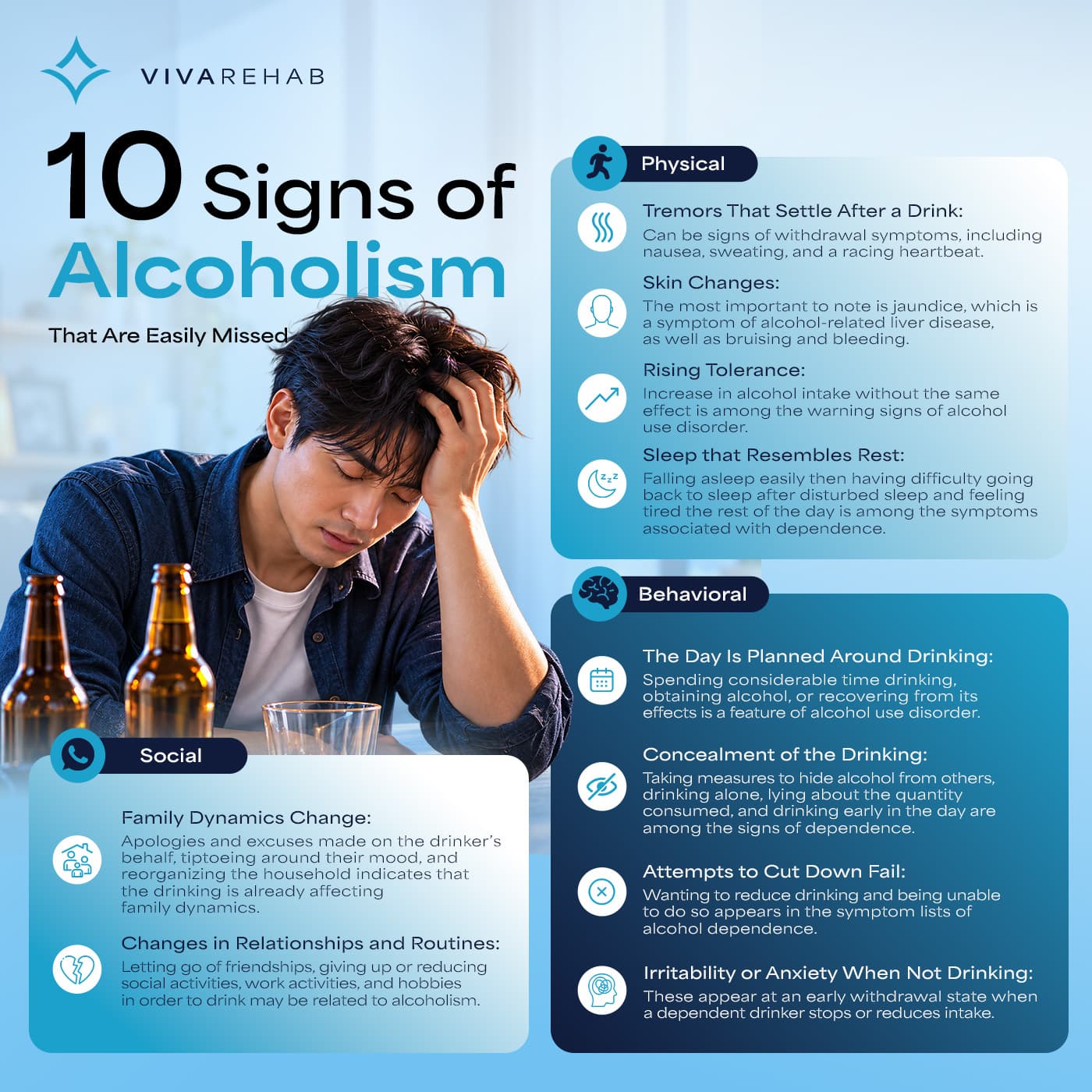
Physical Signs of Alcoholism That Families Explain Away
1. Morning Shakes, Sweating, or Nausea That Settle After a Drink
Shaking hands in the morning is often attributed to nerves. Sweating is attributed to the weather. However, the NHS lists withdrawal symptoms, including anxiety, disturbed sleep, nausea, sweating, a racing heartbeat, and tremor, and notes that these symptoms are a sign the body has become dependent on alcohol. If they ease once there is alcohol in the system, the drinking has become a means for maintenance rather than choice.
2. Changes to the Skin
The signs of alcoholism on the skin often develop slowly enough that nobody at home may notice them. The most important is jaundice, a yellowing of the skin or the whites of the eyes, which the NHS lists among the symptoms of alcohol-related liver disease as damage progresses, and which may be harder to see on darker skin. Yellowing of the skin or eyes warrants medical attention immediately; a doctor assessing alcohol dependence will examine for jaundice alongside a liver function test. Easy bruising is also relevant, since alcohol can damage bone marrow and lower the platelet count, which leads to bruising and bleeding.
3. Rising Tolerance
Four drinks become eight, and there are no visible or tangible changes. Families tend to regard this as a strong constitution. However, this more often than not shows the drinker is developing a tolerance, so that more alcohol is needed to feel the same effect, which is among the signs of alcohol use disorder.
4. Sleep that Resembles Rest
Alcohol brings sleep on quickly, which is why many consider it a nightcap, but it can disrupt the rest of the night. Difficulty sleeping is among the symptoms associated with dependence. The pattern worth noticing is falling asleep quickly, waking at three or four in the morning, and then feeling exhausted by the middle of the afternoon.
Behavioral Signs of Alcoholism Filed Under Stress
5. Drinking Becomes the Fixed Point of the Day
Plans form around it: the social venue is chosen for its wine list, the holiday is booked for the all-inclusive bar, and the evening is planned on whether it can end with a drink. Spending considerable time drinking, obtaining alcohol, or recovering from its effects is a feature of alcohol use disorder. Families usually notice the resistance to alternatives, but rarely the pattern itself.
6. Concealment
Taking measures to conceal drinking, such as a second bottle kept separately, or a glass topped up out of sight so the count at the table remains respectable. Or a drink before the dinner party so that consumption appears moderate. Hiding alcohol from members of the household, drinking alone, lying about the quantity consumed, and drinking early in the day are among the signs of dependence.
7. Failed Attempts to Cut Down
Attempts to cut back on drinking are often short-lived, which families often read as having a weak will. Clinically, however, it carries considerable weight. Wanting to reduce drinking and being unable to do so appears in the symptom lists of alcohol dependence.
8. Irritability or Anxiety When Drinking is Delayed
A delayed flight, a long meeting, or a dry gathering, and the person’s mood turns irritable or anxious. Anxiety is among the symptoms that appear when a dependent drinker stops or reduces intake. This is an early withdrawal state rather than a personality trait, and it usually appears well before anyone in the household even considers it an addiction.
Social Signs of Alcoholism a Household Absorbs
9. Family Starts Managing Around the Drinking
Apologies are made on someone’s behalf. Invitations are declined to avoid a predictable progress of the evening. Children learn which hours are safe and are briefed on what not to say or do. Families rarely count this as evidence, because each decision appears reasonable at the time. Considered together, however, a household that has reorganized itself indicates that the drinking is already affecting family dynamics.
10. Narrowing of Relationships and Routine
Friendships tend to thin out for people who drink in the same way. Giving up or reducing social activities, work activities, and hobbies in order to drink are among the signs of alcoholism. Employment usually stays steady, while everything else contracts.
No single sign on this list confirms an addiction, and several have other explanations. However, when several of them appear together, the appropriate next step is to speak with a doctor or treatment provider.
Heavy Drinking is Not the Same as Alcohol Dependence
The two terms are often used interchangeably, and the distinction determines what kind of help is appropriate.
Heavy drinking is defined by quantity and frequency, and national thresholds differ. For instance, the UK guidance is to drink no more than 14 units a week, spread across three days or more. The Australian guidelines recommend no more than 10 standard drinks a week and no more than four on any one day. A person may drink above these levels for years without becoming dependent.
Alcohol dependence, which clinicians term alcohol use disorder or alcoholism, is defined by impaired control rather than volume or frequency of alcohol consumption. Clinically, alcohol dependence is defined by compulsive use, tolerance, and physical withdrawal symptoms. Symptoms include being unable to limit intake, unsuccessful attempts to cut down, craving, time spent drinking or recovering, tolerance, withdrawal symptoms, and continuing despite harm to health, work, or relationships.
Why a Functioning Drinker Can Still Meet the Criteria
A functioning person can meet the criteria for a moderate or severe substance use disorder while performing well at work. High-functioning individuals often prioritize their professional identity and financial stability above all else. They will exhaust immense cognitive and physical energy to keep their public life intact, making work often the last commitment to fail.
When work performance remains strong, financial obligations are met, and daily life appears stable, it is easy to assume that drinking is under control. This perception often reinforces denial, even as alcohol use disorder develops. The absence of obvious consequences does not mean the absence of a problem. In fact, the ability to keep everything together can be one of the greatest barriers to seeking help early.
When Detox Needs Medical Supervision
Families frequently arrive at a reasonable-sounding plan: reduce gradually at home, with support, and avoid the cost and disruption of a residential program. Where the drinker has become physically dependent, that plan carries genuine risk.
Alcohol is one of the few substances where withdrawal can be life-threatening. The NHS states plainly that it can be very dangerous to stop drinking suddenly if a person is dependent on alcohol, and advises obtaining medical help before attempting to stop. Its list of withdrawal symptoms includes hallucinations, confusion, and seizures, and it directs anyone experiencing severe symptoms to emergency care. The warning signs of alcoholism pointing to this level of risk are the ones described earlier: morning shakes, sweating, and nausea that settle after a drink, and drinking to stop feeling unwell.
A taper is, therefore, a medical decision. This decision must come from a doctor who has assessed the person directly. If withdrawal symptoms are present, the next step is to contact a doctor or treatment provider. A supervised detox begins with a comprehensive clinical assessment to determine the safest course of treatment. Where appropriate, medication may be prescribed alongside 24-hour nursing supervision, ensuring withdrawal is managed safely before transitioning directly into therapy. At Viva Rehab, detox and ongoing treatment take place in one location under the care of the same clinical team, providing continuity throughout the recovery process.
Arranging for Alcohol Rehab in Thailand
One assumption delays more admissions than any other: that the drinker must agree before anyone will speak to a provider. In practice, the first call usually comes from a partner or an adult child.
A clinical assessment precedes any booking. Drinking history, physical health, any mental health diagnosis, and current medication are reviewed, which determines whether a detox is required and which track is appropriate.
Practical arrangements follow. Flights, visa requirements for the person’s nationality, what to bring, and whether a family member will travel with them are planned. Entry requirements change, so confirm the current rules and allow the rehab admissions team to assist with the process.

Why Families Choose Viva Rehab Thailand
One of the greatest advantages of seeking treatment abroad is the ability to step completely outside the environment that reinforces drinking habits. Distance creates a clean break from familiar routines, social pressures, and daily triggers, allowing recovery to begin in a setting designed entirely around healing and long-term change.
Viva Rehab Thailand is part of The Dawn Group, a CARF-accredited rehab, and operates separate tracks for addiction and mental health, offering treatment plans tailored to the client’s needs for recovery. On-site detox with 24/7 nursing support, free lifetime aftercare, and the Addiction Relapse Warranty address the periods families worry about most – the first week, and the year following discharge.
Have questions about alcohol addiction treatment in Thailand? Contact Viva Rehab.
References:
- Alcohol Use Disorder. Retrieved on 12 October 2026 from https://www.mayoclinic.org/diseases-conditions/alcohol-use-disorder/symptoms-causes/syc-20369243
- Signs of Alcohol Dependence. Retrieved on 12 October 2026 from https://www2.hse.ie/living-well/alcohol/dependence/signs-patterns/
- Alcohol-Use Disorder. Retrieved on 12 October 2026 from https://www.nhs.uk/conditions/alcohol-use-disorder/
- Alcohol-related liver disease (ARLD). Retrieved on 12 October 2026 from https://www.nhs.uk/conditions/alcohol-related-liver-disease-arld/
- Alcohol Dependence (Alcoholism). Retrieved on 12 October 2026 from https://www.healthdirect.gov.au/alcoholism